




























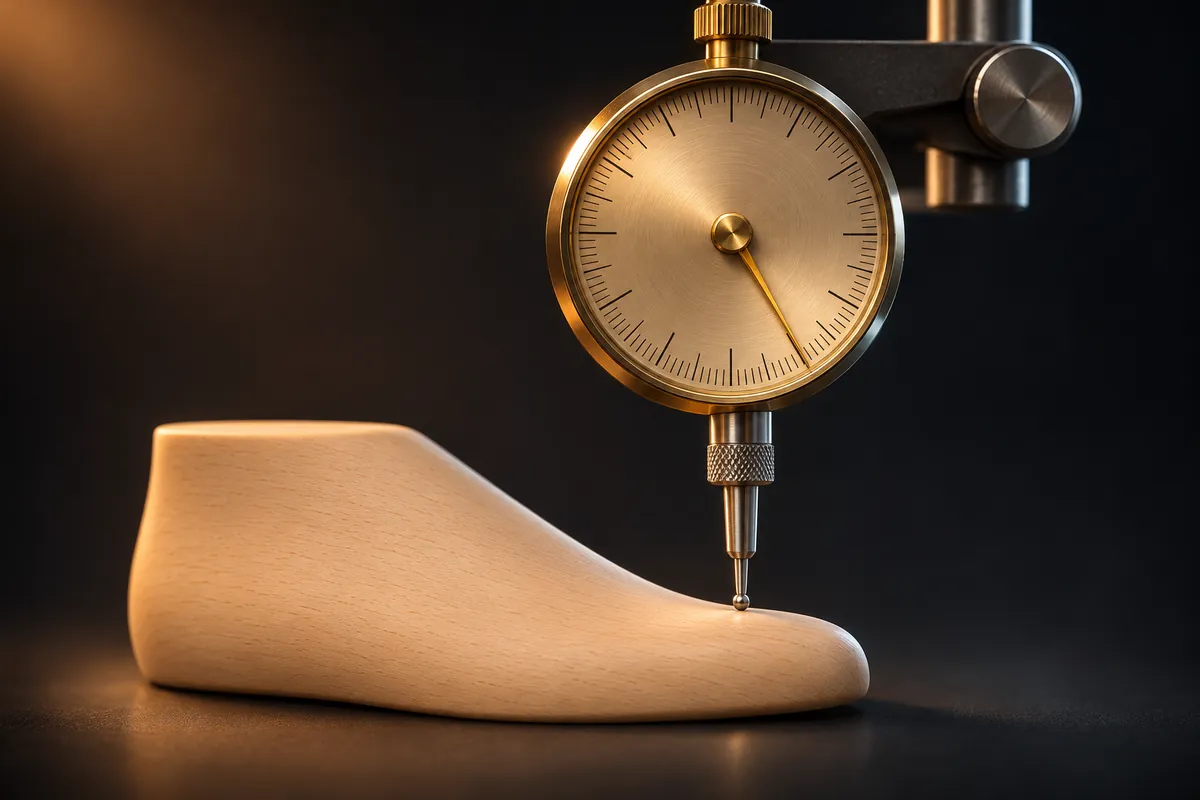

There’s a persistent myth in footwear development: that the goal is to create the perfect last. Teams spend months iterating on a single shape, chasing an ideal that shifts with every fitting session and every new opinion in the room.
Precision is different. Precision means knowing exactly where you are, even if you’re not where you want to be yet.
The Measurement Gap
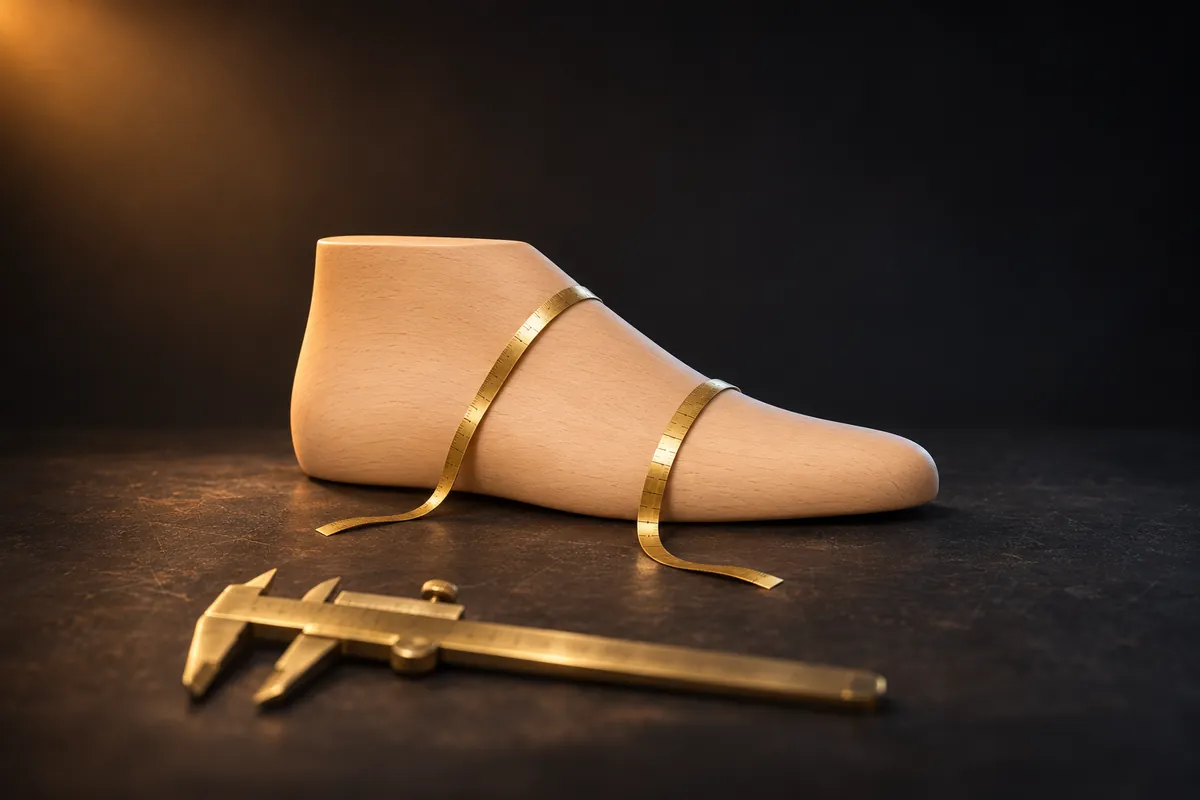
Most last development relies on a handful of manual measurements — ball girth, waist girth, toe spring, heel height. These five or six numbers are supposed to capture the behavior of a three-dimensional surface with compound curvatures and asymmetric transitions.
They can’t.
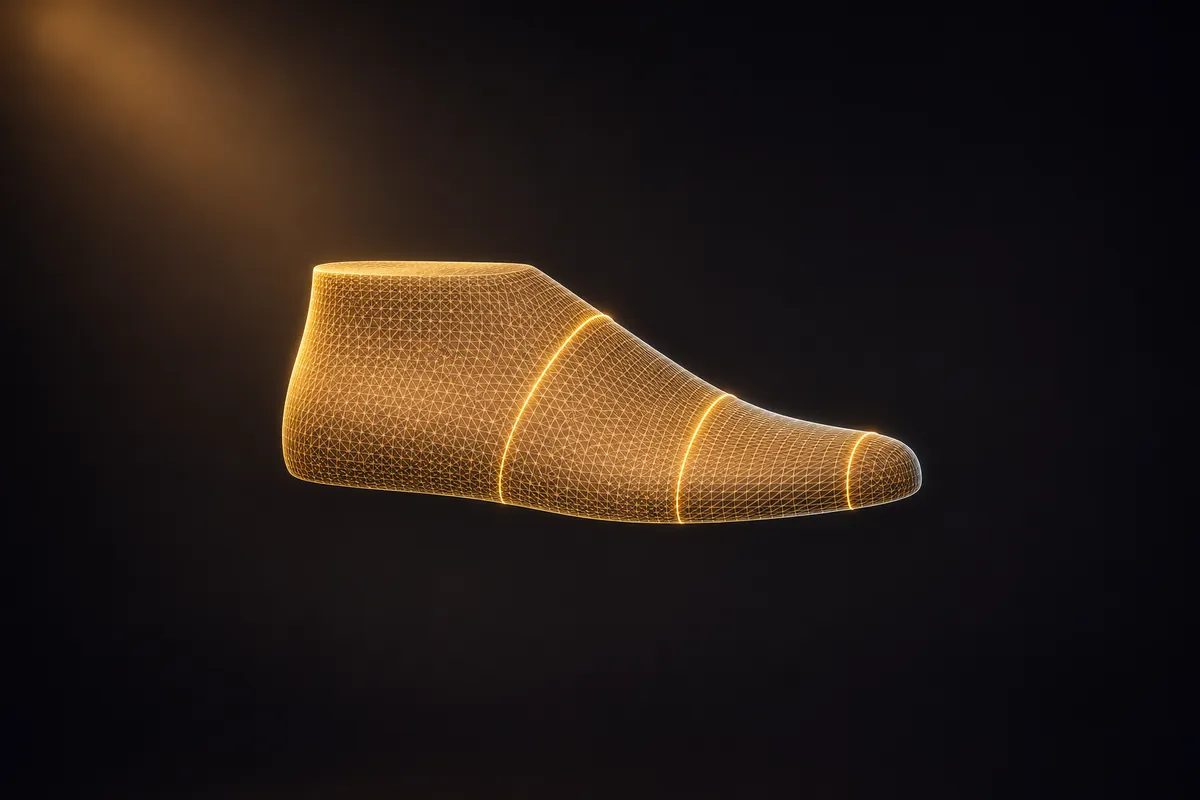
A last has roughly 12,000 to 18,000 measurable surface points depending on scan resolution. Reducing that to six tape-measure readings is like describing a face with only its height and width. Technically accurate. Practically useless for identification.
What Gets Lost
| Measurement | What it captures | What it misses |
|---|---|---|
| Ball girth | Circumference at widest point | Medial/lateral asymmetry, forefoot splay angle |
| Toe spring | Vertical lift at toe tip | Curvature profile along the entire forefoot |
| Heel height | Vertical drop from heel to ball | Transition curve, pitch distribution |
The missing data isn’t trivial. It’s where fit lives.
Systems Over Shapes
The shift we’re seeing across the industry isn’t about better lasts. It’s about better systems for managing last data. When a brand can:
- Capture full 3D geometry at every development stage
- Compare iterations quantitatively, not qualitatively
- Track how grading transforms propagate across the size run
- Correlate last geometry with post-market fit feedback
…the individual shape matters less than the process surrounding it. A mediocre last inside a precise system will outperform a brilliant last inside a chaotic one, every time.
Where We’re Headed
The next generation of footwear engineering tools won’t ask “is this last good?” They’ll ask “how does this last compare to the 4,000 validated geometries in your library, and what does that predict about its fit performance across your target demographic?”
That’s not a vision statement. That’s a query we’re already running.
Stop chasing the perfect shape. Start building the system that makes every shape measurable, comparable, and improvable.